Anchor Bolt Size Chart 2026 – Diameter, Embedment & Hole Size
Anchor Bolt Size Chart
Diameter, Embedment & Hole Size
The complete anchor bolt reference for contractors, structural engineers, inspectors, and fabricators — diameter, hole size, embedment, spacing, and bolt types.
 Reviewed by Muhammad Ramzan Babar, PhD Researcher (Plasma Physics) & Calculator Developer — View Profile
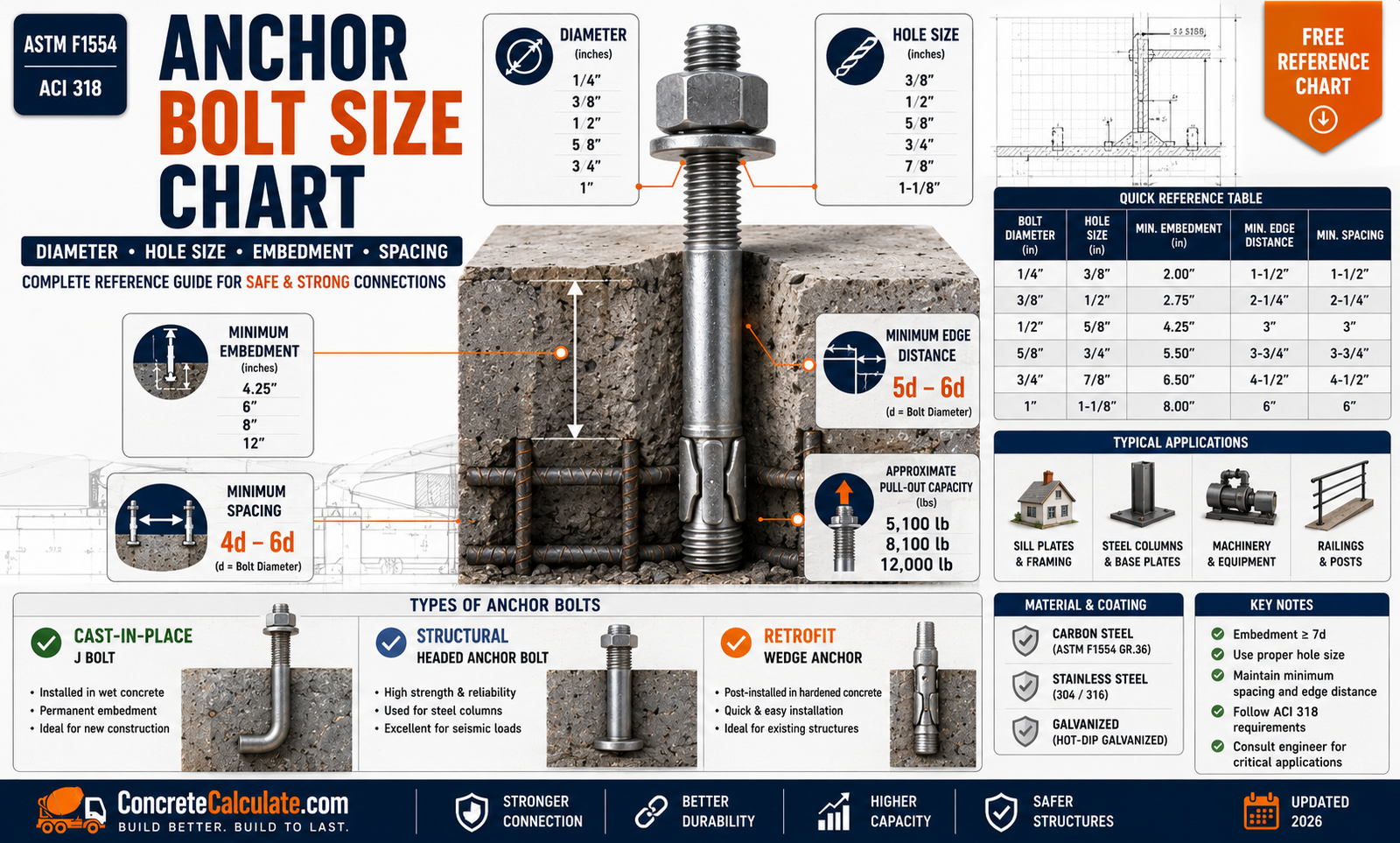
⭐ Master Anchor Bolt Size Chart
Complete reference showing anchor bolt diameters, hole sizes, embedment depths, and common applications at a glance.
How to Read This Chart
Embedment values assume cast-in-place ASTM F1554 Grade 36 bolts in 3,500+ PSI concrete. Always verify against manufacturer specs for post-installed anchors. Size your project with our Anchor Bolt Calculator.
| Bolt Size | Hole Diameter | Min. Embedment | Common Use |
|---|---|---|---|
| 1/4″ | 3/8″ | 2″ | Light fixtures, brackets |
| 3/8″ | 1/2″ | 3″ | Handrails, light equipment |
| 1/2″ | 5/8″ | 4–4.25″ | Sill plates, sign posts |
| 5/8″ | 3/4″ | 5–6″ | Deck posts, guardrails |
| 3/4″ | 7/8″ | 6–6.5″ | Steel columns, light poles |
| 7/8″ | 1″ | 7–7.5″ | Structural beams |
| 1″ | 1-1/8″ | 8–8.5″ | Heavy machinery, base plates |
| 1-1/4″ | 1-3/8″ | 10–12″ | Heavy structural, seismic bracing |
Source: ASTM F1554 Grade 36 embedment guidance, based on properly installed anchors in 3,500 PSI+ concrete [Kelken US-Metric Chart].
Anchor Bolt Diameter Chart
Standard imperial anchor bolt diameters with metric equivalents.
| Bolt Size | Diameter (in) | Diameter (mm) |
|---|---|---|
| 1/4″ | 0.250″ | 6.35 mm |
| 3/8″ | 0.375″ | 9.53 mm |
| 1/2″ | 0.500″ | 12.70 mm |
| 5/8″ | 0.625″ | 15.88 mm |
| 3/4″ | 0.750″ | 19.05 mm |
| 7/8″ | 0.875″ | 22.23 mm |
| 1″ | 1.000″ | 25.40 mm |
| 1-1/8″ | 1.125″ | 28.58 mm |
| 1-1/4″ | 1.250″ | 31.75 mm |
| 1-1/2″ | 1.500″ | 38.10 mm |
Anchor Bolt Dimensions Chart
Reference for thread length, overall length, and matching nut/washer sizes by diameter.
| Diameter | Std. Thread Length | Typical Overall Length | Nut Size | Washer Size |
|---|---|---|---|---|
| 3/8″ | 1.5″ | 6″–8″ | 9/16″ hex | 7/8″ OD |
| 1/2″ | 2″ | 8″–12″ | 3/4″ hex | 1-1/8″ OD |
| 5/8″ | 2.5″ | 10″–14″ | 15/16″ hex | 1-3/8″ OD |
| 3/4″ | 3″ | 12″–18″ | 1-1/8″ hex | 1-3/4″ OD |
| 7/8″ | 3″ | 14″–20″ | 1-5/16″ hex | 2″ OD |
| 1″ | 3.5″ | 16″–24″ | 1-1/2″ hex | 2-1/4″ OD |
⭐ Anchor Bolt Hole Size Chart
Correct hole diameter is critical for both cast-in-place and post-installed anchor performance.
| Anchor Bolt Size | Hole Diameter (in) | Hole Diameter (mm) |
|---|---|---|
| 1/4″ | 3/8″ | 9.5 mm |
| 3/8″ | 1/2″ | 12.7 mm |
| 1/2″ | 5/8″ | 15.9 mm |
| 5/8″ | 3/4″ | 19.1 mm |
| 3/4″ | 7/8″ | 22.2 mm |
| 7/8″ | 1″ | 25.4 mm |
| 1″ | 1-1/8″ | 28.6 mm |
| 1-1/4″ | 1-3/8″ | 34.9 mm |
For post-installed wedge/sleeve anchors, always follow the exact drill bit size printed on the manufacturer’s packaging — undersized holes prevent proper expansion.
Anchor Bolt Embedment Depth Chart
Embedment depth determines pull-out resistance — deeper embedment engages more surrounding concrete for breakout resistance.
| Bolt Size | Minimum Embedment | Typical Embedment |
|---|---|---|
| 1/4″ | 1.75″ | 2″–3″ |
| 3/8″ | 2.6″ | 3″–4″ |
| 1/2″ | 4.25″ | 4.25″–7″ |
| 5/8″ | 6″ | 6″–8″ |
| 3/4″ | 6.5″ | 6.5″–9″ |
| 7/8″ | 7.5″ | 7.5″–10″ |
| 1″ | 8.5″ | 8.5″–12″ |
| 1-1/8″ | 10″ | 10″–14″ |
| 1-1/4″ | 12″ | 12″–15″ |
| 1-1/2″ | 15″ | 15″–18″ |
Source: ASTM F1554 Grade 36 minimum embedment data. Verify structural embedment with our Anchor Bolt Embedment Calculator.
Anchor Bolt Size by Construction Application
Practical anchor bolt sizing by common project type.
| Project | Recommended Anchor Bolt |
|---|---|
| House Foundations | 1/2″–5/8″ |
| Sill Plates | 1/2″ |
| Steel Columns | 3/4″–1″ |
| Structural Beams | 7/8″–1-1/4″ |
| Machinery | 3/4″–1-1/2″ (load-dependent) |
| Sign Posts | 1/2″–3/4″ |
| Guardrails | 1/2″–5/8″ |
| Light Poles | 3/4″–1″ |
| Deck Posts | 1/2″–5/8″ |
| Retaining Walls | 5/8″–3/4″ |
Plan your foundation layout with our Foundation Calculator or Concrete Pier Calculator.
Anchor Bolt Size by Load Capacity
Match bolt diameter to the expected tension/shear demand category.
| Load Category | Recommended Bolt Size |
|---|---|
| Light Loads | 1/4″–3/8″ (fixtures, brackets, handrails) |
| Medium Loads | 1/2″–5/8″ (sill plates, sign posts, deck posts) |
| Heavy Loads | 3/4″–1″ (steel columns, light poles, machinery) |
| Structural Loads | 1″–1-1/2″+ (structural beams, seismic bracing) |
Anchor Bolt Pull-Out Capacity Chart
Approximate tensile pull-out capacity for common sizes at minimum embedment in 3,500 PSI concrete, ASTM F1554 Grade 36.
| Bolt Size | Embedment | Approx. Tensile Capacity (lb) |
|---|---|---|
| 1/2″ | 4.25″ | ~5,100 lb |
| 5/8″ | 6″ | ~8,100 lb |
| 3/4″ | 6.5″ | ~12,000 lb |
| 7/8″ | 7.5″ | ~16,600 lb |
| 1″ | 8.5″ | ~21,800 lb |
| 1-1/8″ | 10″ | ~27,500 lb |
Source: ASTM F1554 Grade 36 yield capacity data. Actual capacity also depends on concrete breakout strength — verify with structural calculations for critical applications.
Anchor Bolt Shear Capacity Chart
Shear capacity is typically about half the tensile capacity for the same bolt, per steel strength calculations.
| Bolt Size | Approx. Shear Capacity (lb) |
|---|---|
| 1/2″ | ~4,100 lb |
| 5/8″ | ~6,550 lb |
| 3/4″ | ~9,700 lb |
| 7/8″ | ~13,400 lb |
| 1″ | ~17,600 lb |
| 1-1/8″ | ~22,100 lb |
Cross-check base plate design with our Base Plate Calculator.
Anchor Bolt Spacing Chart
Adequate spacing prevents overlapping breakout cones and concrete splitting between adjacent anchors.
| Bolt Size | Minimum Spacing | Recommended Spacing | Edge Distance |
|---|---|---|---|
| 1/2″ | 2″ (4d untorqued) | 4″+ | 2.5″–3″ |
| 5/8″ | 2.5″–3.75″ (4d–6d) | 5″+ | 3″–3.75″ |
| 3/4″ | 3″–4.5″ (4d–6d) | 6″+ | 3.5″–4.5″ |
| 1″ | 4″–6″ (4d–6d) | 8″+ | 5″–6″ |
Per ACI 318 App. D: minimum spacing is 4 x bolt diameter (untorqued) or 6 x bolt diameter (torqued). Verify layout with our Anchor Bolt Spacing Calculator.
Anchor Bolt Edge Distance Chart
Proper edge distance prevents concrete breakout by keeping enough concrete mass around the anchor to resist the cone-shaped failure surface.
| Bolt Size | Minimum Edge Distance | Recommended Edge Distance | Maximum Practical Distance |
|---|---|---|---|
| 1/2″ | 2.5″ (5d) | 3″–4″ | 6″+ |
| 5/8″ | 3.1″ (5d) | 4″–5″ | 7″+ |
| 3/4″ | 3.75″ (5d) | 4.5″–6″ | 8″+ |
| 1″ | 5″ (5d) | 6″–8″ | 10″+ |
Why Edge Distance Matters
Insufficient edge distance causes a cone-shaped section of concrete to break away under load (concrete breakout), drastically reducing capacity. ACI 318 recommends a minimum edge distance of 6 bolt diameters for torqued anchors to prevent side-face blowout failure.
Anchor Bolt Thread Length Chart
Thread length must be sufficient to engage the nut fully after accounting for base plate thickness, washer, and grout.
| Bolt Diameter | Standard Thread Length | Full vs Partial Thread |
|---|---|---|
| 3/8″ | 1.5″ | Partially threaded standard; fully threaded for light fixtures |
| 1/2″ | 2″ | Partially threaded standard; fully threaded common for sill plates |
| 5/8″ | 2.5″ | Partially threaded for structural connections |
| 3/4″ | 3″ | Partially threaded for base plates; full thread for adjustable leveling |
| 1″ | 3.5″ | Partially threaded standard for heavy structural use |
Fully threaded bolts offer installation flexibility for varying base plate thicknesses; partially threaded bolts maximize shear strength in the unthreaded shank.
⭐ Anchor Bolt Types Comparison
Choosing the right anchor type depends on whether concrete is wet or cured, and the loading demands.
| Anchor Type | Installation | Best-Use Application |
|---|---|---|
| J-Bolts | Cast-in-place, wet concrete | Sill plates, light structural anchoring |
| L-Bolts | Cast-in-place, wet concrete | Sill plates, general foundation anchoring |
| Straight Anchor Bolts | Cast-in-place, wet concrete | Base plates, machinery, structural columns |
| Headed Anchor Bolts | Cast-in-place, wet concrete | High-load structural connections, steel columns |
| Wedge Anchors | Post-installed, drilled hole | Retrofit structural connections, general mounting |
| Sleeve Anchors | Post-installed, drilled hole | Light-to-medium fixtures, brick/block/concrete |
| Drop-In Anchors | Post-installed, drilled hole, internally threaded | Removable/adjustable equipment mounting |
| Epoxy Anchors | Post-installed, drilled hole + adhesive | High-load retrofit, rebar dowels, seismic upgrades |
Anchor Bolt Material & Grade Chart
Material and grade selection depends on corrosion exposure and required strength.
| Material/Grade | Yield Strength | Best Use |
|---|---|---|
| Carbon Steel | Varies by grade | General indoor structural use, cost-effective |
| Stainless Steel | Varies by grade | Marine, chemical, high-corrosion environments |
| Hot-Dip Galvanized Steel | Same as base steel | Outdoor/exterior exposure, moderate corrosion resistance |
| ASTM F1554 Grade 36 | 36 ksi | Standard structural anchor bolts, most common grade |
| ASTM F1554 Grade 55 | 55 ksi | Higher-strength structural connections |
| ASTM F1554 Grade 105 | 105 ksi | Heavy structural/seismic applications, highest strength |
Imperial vs Metric Anchor Bolt Size Chart
Quick conversion between imperial and metric bolt designations.
| Imperial | Metric Equivalent |
|---|---|
| 3/8″ | M10 |
| 1/2″ | M12 |
| 5/8″ | M16 |
| 3/4″ | M20 |
| 7/8″ | M22 |
| 1″ | M24 |
| 1-1/4″ | M30 |
Note: metric equivalents are nearest standard size, not exact conversions — always verify with manufacturer specs for critical applications.
Anchor Bolt Selection Guide
Decision table matching common applications to bolt size and embedment.
| Application | Recommended Bolt | Typical Embedment |
|---|---|---|
| Residential sill plate | 1/2″ | 7″ |
| Deck post base | 1/2″–5/8″ | 4″–6″ |
| Steel column base plate | 3/4″–1″ | 6.5″–8.5″ |
| Light pole foundation | 3/4″–1″ | 6.5″–8.5″ |
| Sign post foundation | 1/2″–3/4″ | 4″–6.5″ |
| Heavy machinery pad | 1″–1-1/2″ | 8.5″–15″ |
Common Anchor Bolt Installation Mistakes
Field errors that compromise anchor performance regardless of bolt quality.
Incorrect hole diameter
Oversized holes reduce mechanical anchor grip; undersized holes prevent proper insertion or expansion.
Insufficient embedment
Shallow embedment drastically reduces pull-out and breakout capacity, risking anchor failure under load.
Edge distance too small
Anchors placed too close to a concrete edge cause side-face blowout failure under tension load.
Improper bolt spacing
Bolts placed too close together cause overlapping breakout cones, reducing the group’s total capacity.
Over-tightening
Excessive torque can strip threads, crack the base material, or overstress the anchor beyond its rated capacity.
Under-tightening
Insufficient torque leaves connections loose, allowing vibration-induced loosening and reduced clamping force over time.
Poor concrete quality
Low-strength, honeycombed, or improperly cured concrete significantly reduces anchor pull-out and breakout capacity.
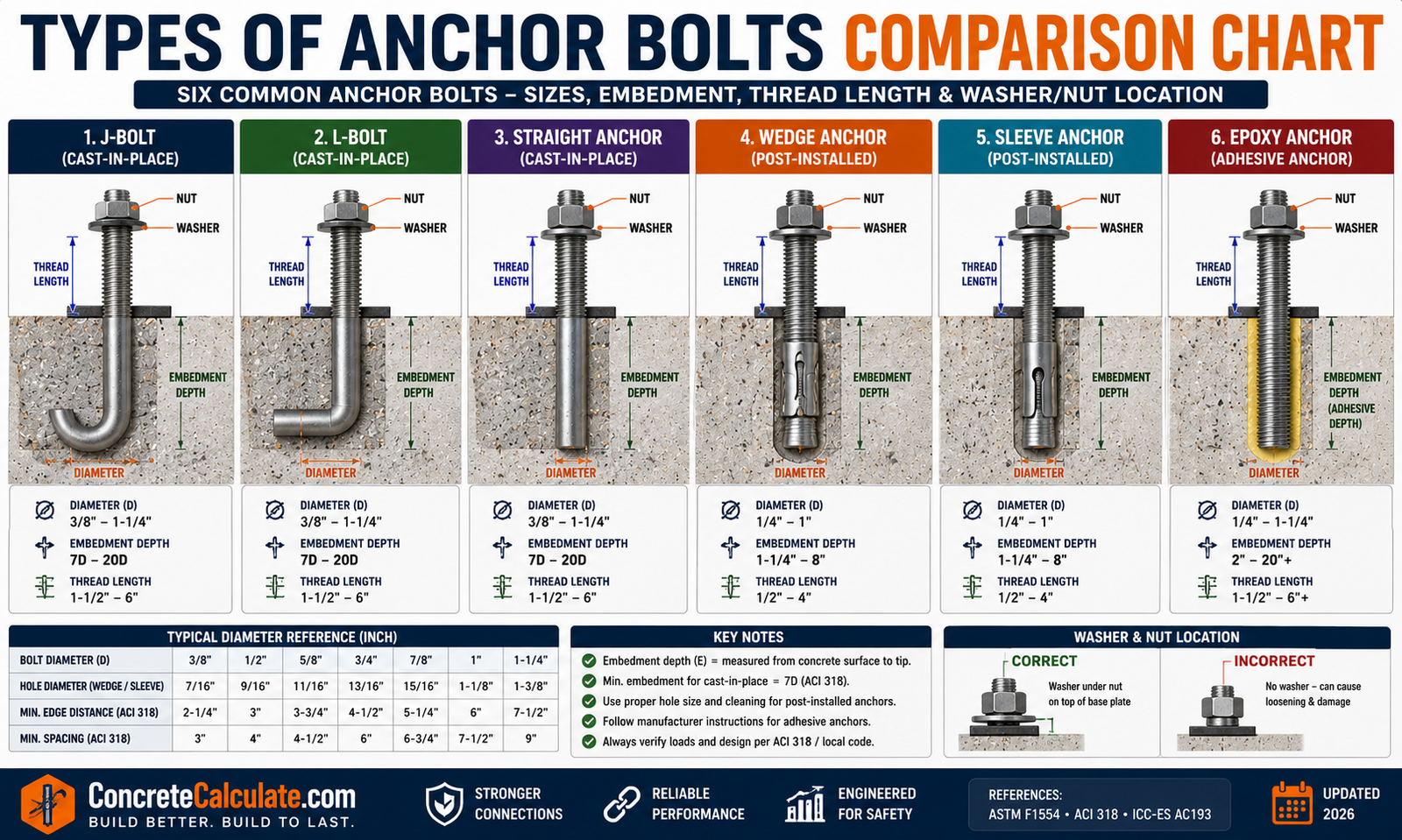
⭐ Visual Anchor Bolt Size Guide
Comparing common anchor bolt shapes and key dimensions.
J-Bolt
Hooked end embedded in wet concrete; diameter, embedment, thread length labeled
L-Bolt
90° bent leg for embedment; similar dimensioning to J-bolt
Straight Anchor Bolt
Straight shank with nut/washer at top, headed or plain at embedded end
Wedge Anchor
Expansion clip at embedded end, visible drill depth marking
Sleeve Anchor
Expanding metal sleeve around shank, nut/washer visible at surface
Epoxy Anchor
Threaded rod set in adhesive-filled hole, full embedment bond line shown
Contractor Worked Examples
Real-world anchor bolt decisions for common job scenarios.
Sill Plate Anchor Bolts
Steel Column Base Plate
Residential Deck Post
Machinery Foundation
Sign Pole Foundation
Frequently Asked Questions
📥 Download Anchor Bolt Size Chart PDF
Use your browser’s print function to instantly save this page as a PDF — a printable field reference for contractors, structural engineers, inspectors, and fabricators.