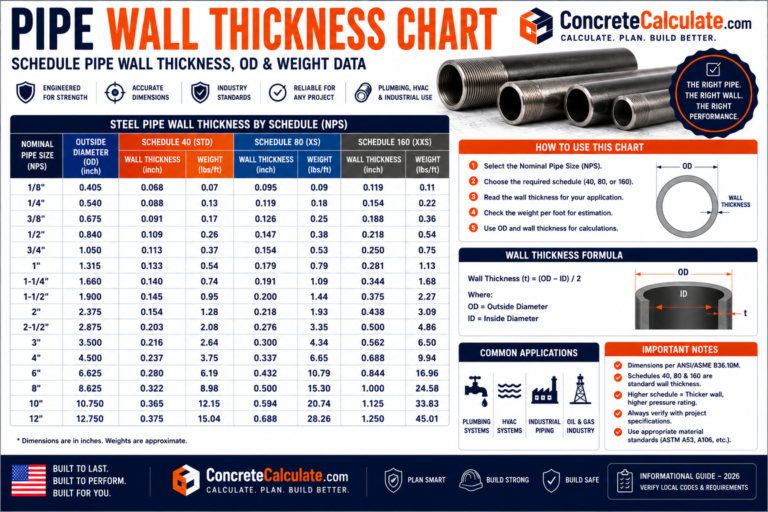
Pipe Wall Thickness Chart – Schedule 40, 80, 160 & Material Comparison
Schedule is a standardized wall thickness series, not a direct thickness value. This chart separates steel, stainless steel and PVC schedules by their actual governing standard.
Find useful construction reference charts covering sizes, dimensions, spacing, materials, and common jobsite measurements.
188 resources available
Schedule is a standardized wall thickness series, not a direct thickness value. This chart separates steel, stainless steel and PVC schedules by their actual governing standard.
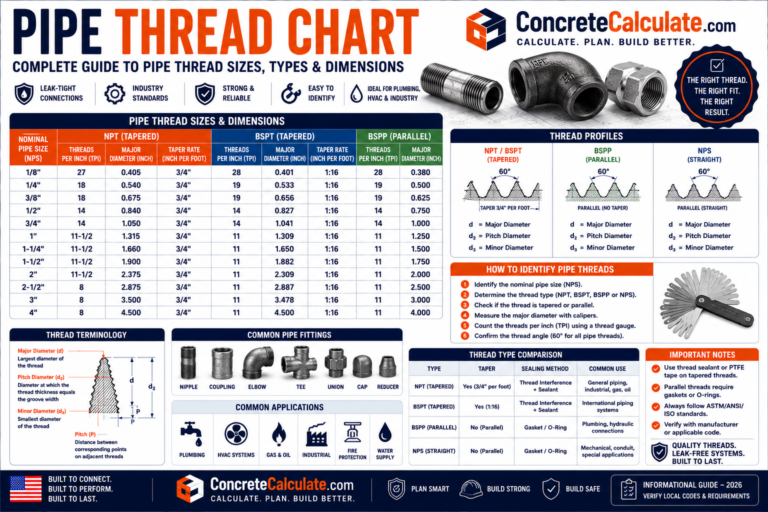
Pipe thread is a family of standards, not one universal thread. This is the comparison and identification hub across every major inch and metric pipe thread…
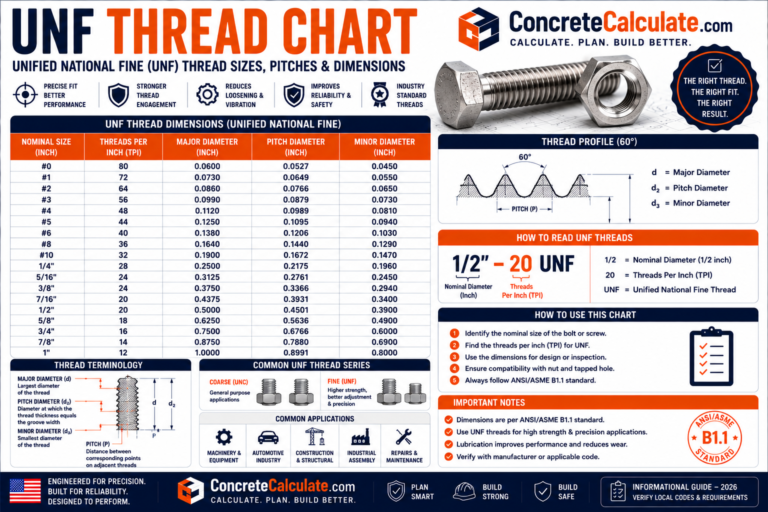
UNF is the fine pitch series of the Unified inch screw thread system. This chart covers screw and fractional sizes, TPI, dimensions, thread classes and identification,…
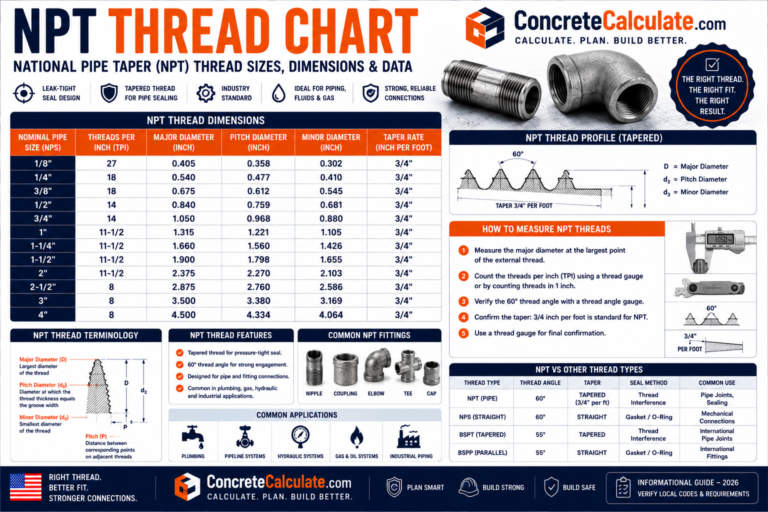
1/2 NPT does not have a 1/2 inch outside diameter. This chart explains why, with complete ASME B1.20.1 based dimensions, taper, engagement, and tap drill data.
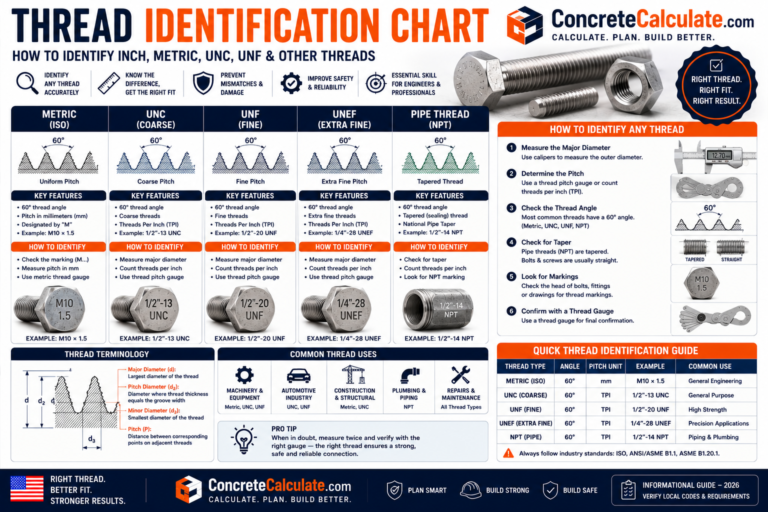
Diameter alone never identifies a thread. This is a practical measure, compare and verify process for UNC, UNF, metric and NPT threads, not just another static…
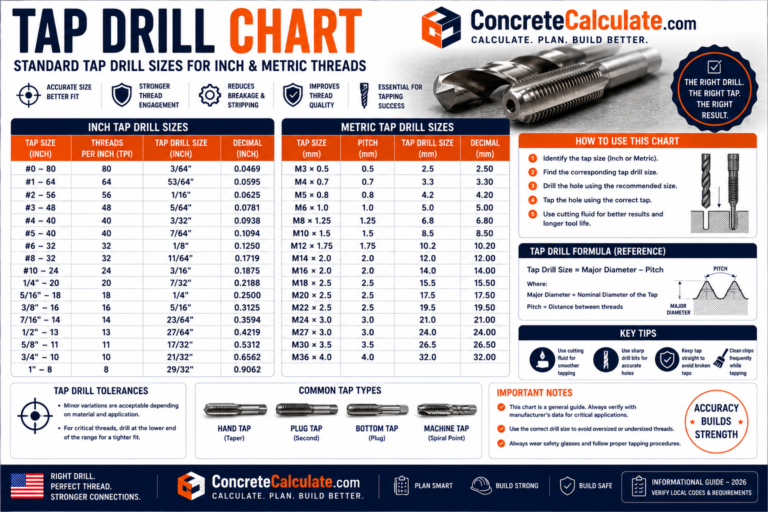
Tap drill selection depends on thread, pitch, desired thread engagement, and tap type. Every table here states its calculation basis rather than a bare recommended drill.
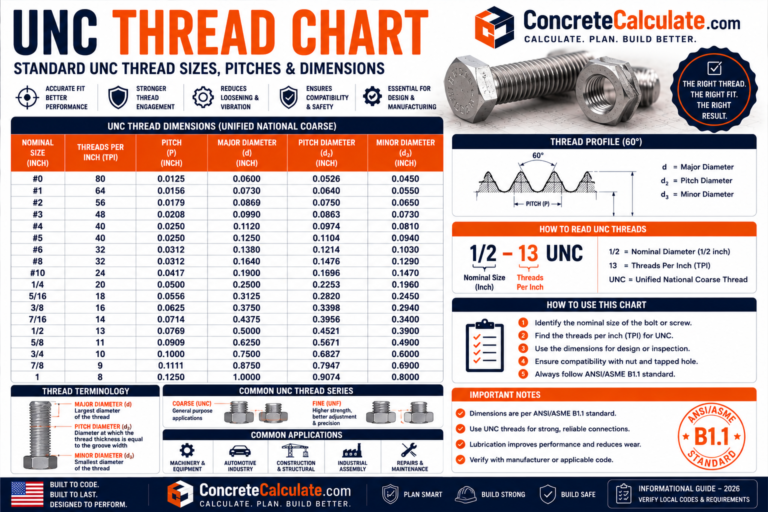
UNC is the coarse pitch series of the Unified inch screw thread system. This chart covers screw and fractional sizes, TPI, dimensions, thread classes and tap…
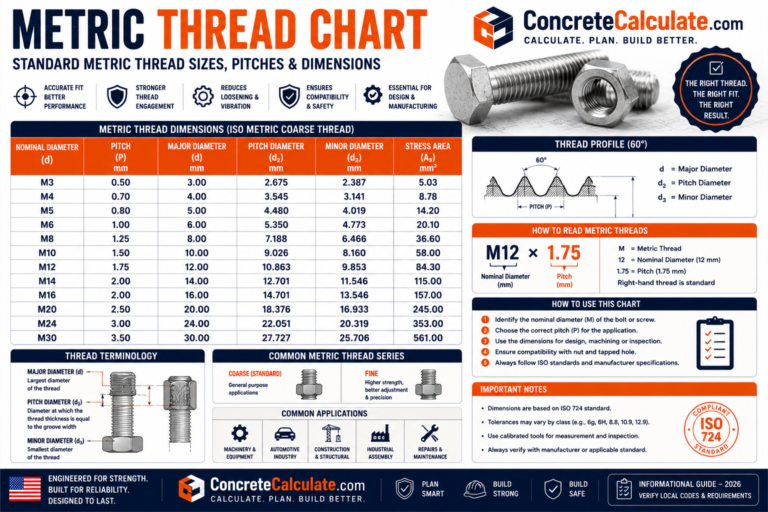
A complete metric thread reference from M1 through M100, covering coarse and fine pitch, major/pitch/minor diameter, tolerance classes, tap drill sizes and identification.
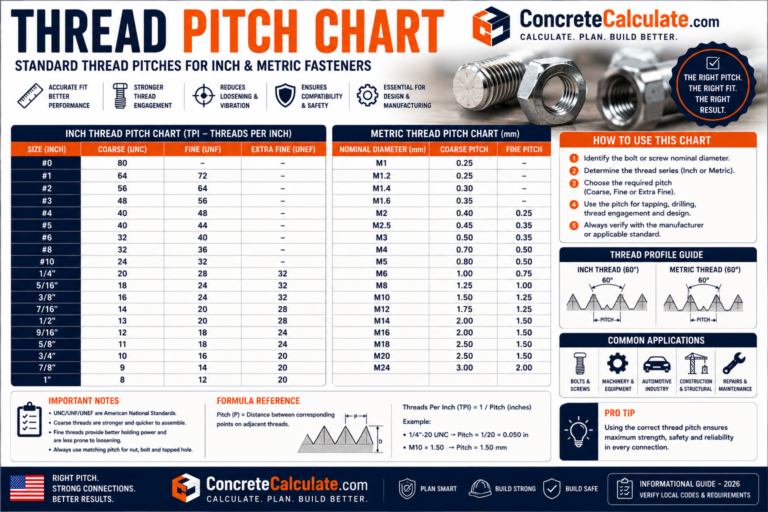
Thread pitch describes spacing, not diameter or strength. This chart separates inch (ASME B1.1) and metric (ISO 261/262) thread systems so you never mix incompatible standards.
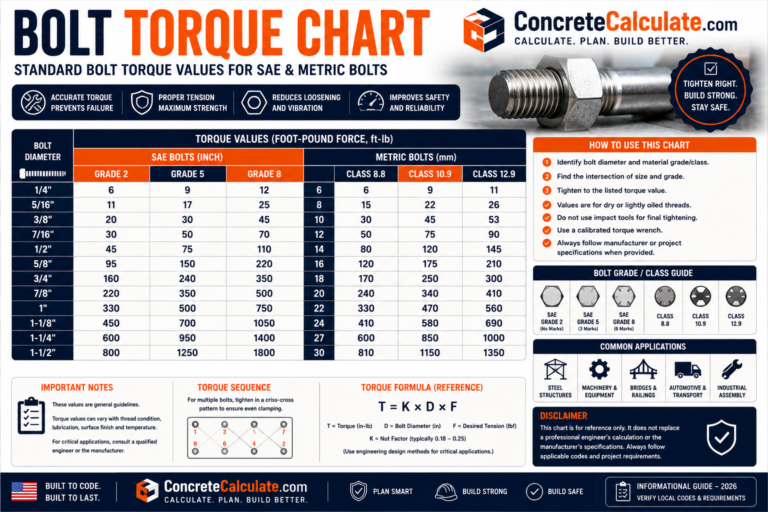
Torque is only an indirect way of producing bolt preload. Every value on this page states its bolt specification, thread type, grade and lubrication condition rather…
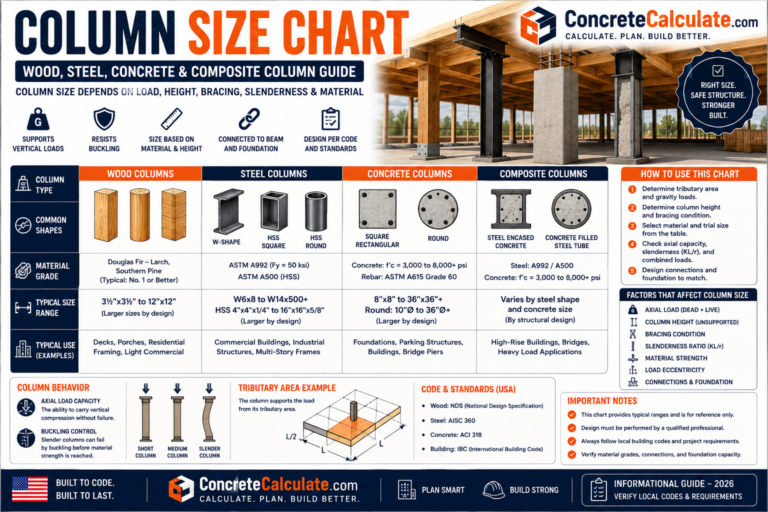
A column's required size depends on material, cross-section, unsupported height, bracing, load, eccentricity and connections, not on a size label alone.
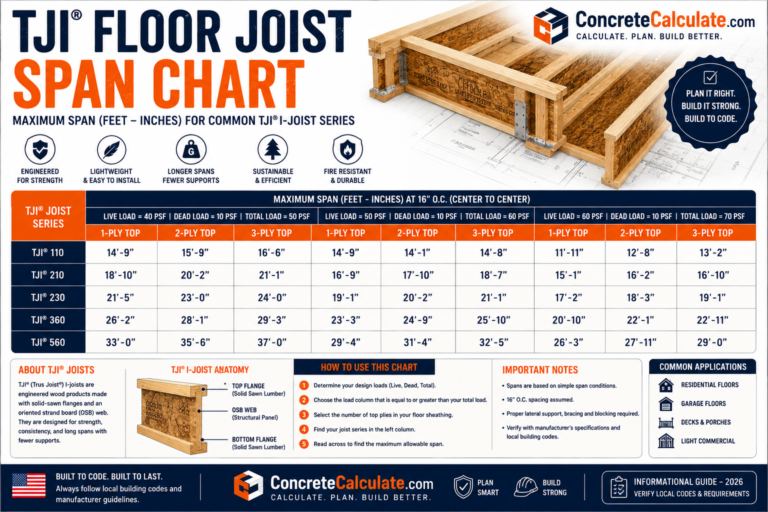
TJI span cannot be determined from depth alone. Use the specific TJI series, depth, spacing, load, deflection limit and support condition, referenced against current Weyerhaeuser design…