Cost of Stamped Concrete vs Regular Concrete: 2026 USA Comparison
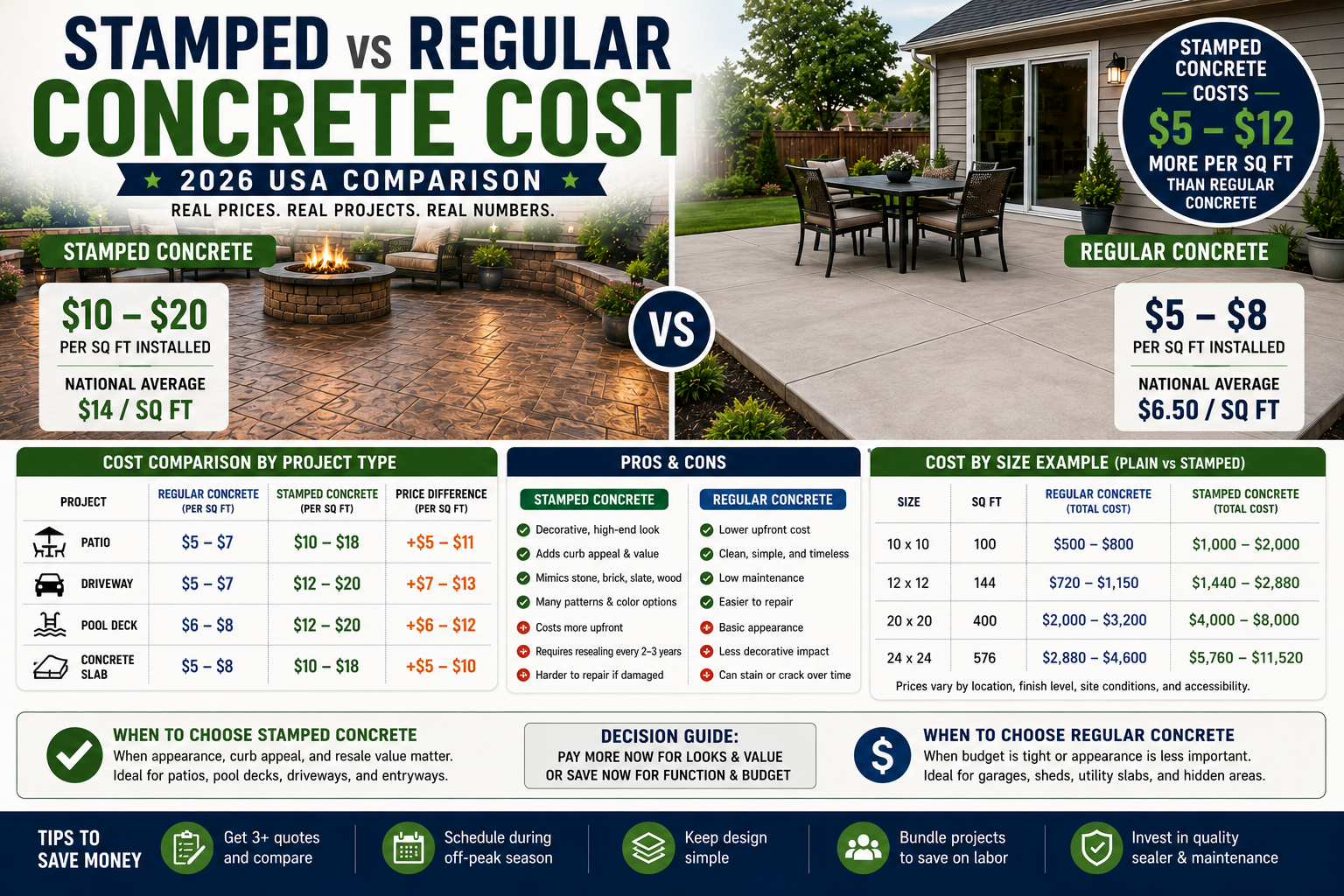
Regular concrete costs $5 to $8 per square foot installed. Stamped concrete costs $10 to $20 per square foot. That’s a difference of $5 to $12 per square foot – or $2,000 to $4,800 more on a standard 400-square-foot patio. This guide breaks down exactly where that extra money goes, whether it’s worth it for your project, and how the two options compare across every major application in 2026.
The Real Cost Difference, Broken Down
Both stamped and regular concrete start from the same base. The concrete mix, excavation, gravel base, forms, and reinforcement are nearly identical for both. What separates the two is the decorative work added after the pour – color, stamps, and sealer. That decorative layer is what you’re paying extra for.
Here’s how the cost layers stack up side by side for a standard residential patio:
| Cost Component | Regular Concrete | Stamped Concrete |
|---|---|---|
| Excavation and grading | $1.00 to $2.00/sq ft | $1.00 to $2.00/sq ft |
| Gravel base (4 inches) | $0.75 to $1.25/sq ft | $0.75 to $1.25/sq ft |
| Forms and setup | $0.50 to $1.00/sq ft | $0.50 to $1.00/sq ft |
| Concrete material (4000 PSI) | $1.50 to $2.50/sq ft | $1.50 to $2.50/sq ft |
| Reinforcement (rebar or mesh) | $0.50 to $1.00/sq ft | $0.50 to $1.00/sq ft |
| Pour and finish labor | $1.00 to $2.00/sq ft | $1.00 to $2.00/sq ft |
| Color (integral + release agent) | None | $1.50 to $3.00/sq ft |
| Stamping labor | None | $3.00 to $7.00/sq ft |
| Sealer (first coat) | Optional ($0.25 to $0.75) | Required ($0.50 to $1.00/sq ft) |
| Total Installed Cost | $5 to $8/sq ft | $10 to $20/sq ft |
Use the stamped concrete cost calculator and the concrete slab cost calculator side by side to see the exact dollar difference for your dimensions before calling a single contractor.
What the Extra Money Actually Buys
When you pay $10 to $12 more per square foot for stamped concrete, here’s where that money goes – and it’s worth understanding before you decide whether it’s justified for your project.
Color
Plain concrete is gray. That’s not a flaw – it’s just the natural result of cement, sand, aggregate, and water. Stamped concrete uses two coloring methods: an integral color (pigment added to the mix before pouring) that tints the entire slab, plus a release agent (colored powder broadcast on the surface before stamping) that adds a contrasting second tone to the high points of the pattern. Together, these create the variation and depth that makes stamped concrete look like stone or brick rather than concrete.
Color materials add $1.50 to $3.00 per square foot. Premium hand-applied accent stains after curing push that to $4 to $6 per square foot. You’re paying for pigment, labor time, and the skill to make it look natural rather than painted.
Pattern and Texture
The stamping itself is timed work done under pressure. After the pour, finishers have a 2 to 8 hour window (shorter in summer heat, longer in cooler temps) to press rubber stamp mats into the surface to create the pattern. Miss the timing and the pattern either tears the surface or doesn’t register. The stamps themselves cost contractors $200 to $600 each, and a full pattern library can represent a $5,000 to $20,000 equipment investment.
Stamping labor adds $3 to $7 per square foot. Complex patterns with tight repeats, multiple tools, or hand-tooled joint lines cost more. Simple large-format patterns like ashlar slate cost less. This is the single biggest cost driver separating basic and premium stamped work.
Sealer
Regular concrete can be left unsealed or sealed for modest protection. Stamped concrete must be sealed to protect the color and surface texture. Without sealer, UV light fades the color within 1 to 2 seasons and road salt or pool chemicals can etch the surface. The first coat of sealer is included in most stamped concrete quotes ($0.50 to $1.00 per square foot), but ongoing resealing every 2 to 3 years is your responsibility as the owner.
Cost Comparison by Project Type
The dollar gap between stamped and regular concrete changes with project size, thickness, and application. Here are side-by-side numbers for the most common residential projects in 2026.
Patio (400 sq ft – 20×20)
| Option | Cost per Sq Ft | Total Cost (400 sq ft) | Extra Over Plain |
|---|---|---|---|
| Plain broom-finish concrete | $5 to $7 | $2,000 to $2,800 | – |
| Basic stamped (1 pattern, 1 color) | $10 to $12 | $4,000 to $4,800 | +$2,000 to $2,000 |
| Mid-range stamped (1 pattern, 2 colors) | $12 to $15 | $4,800 to $6,000 | +$2,800 to $3,200 |
| Premium stamped (custom pattern, border) | $16 to $22 | $6,400 to $8,800 | +$4,400 to $6,000 |
Use the concrete patio calculator to confirm cubic yards for your exact patio dimensions, then compare final numbers using the concrete patio cost calculator.
Driveway (700 sq ft – Two-Car)
| Option | Cost per Sq Ft | Total Cost (700 sq ft) | Extra Over Plain |
|---|---|---|---|
| Plain broom-finish concrete | $6 to $9 | $4,200 to $6,300 | – |
| Basic stamped (1 pattern, 1 color) | $11 to $13 | $7,700 to $9,100 | +$3,500 to $2,800 |
| Mid-range stamped (1 pattern, 2 colors) | $13 to $16 | $9,100 to $11,200 | +$4,900 to $4,900 |
| Premium stamped (cobblestone, border) | $17 to $22 | $11,900 to $15,400 | +$7,700 to $9,100 |
Driveways require 5 to 6 inches of thickness vs. 4 inches for patios, which adds roughly $1 to $2 per square foot to both options equally. Review how thick a concrete driveway should be and use the concrete driveway cost calculator for a full estimate.
Concrete Slab – General Purpose (200 sq ft)
| Option | Cost per Sq Ft | Total Cost (200 sq ft) |
|---|---|---|
| Plain broom-finish slab | $5 to $8 | $1,000 to $1,600 |
| Basic stamped slab | $10 to $13 | $2,000 to $2,600 |
| Mid-range stamped slab | $13 to $17 | $2,600 to $3,400 |
Compare Both Options for Your Project
Enter your dimensions once and see stamped vs. plain concrete costs side by side.
Use the Concrete Cost CalculatorInstallation Process Differences
Regular and stamped concrete share the same first four steps: excavation, base preparation, forming, and pouring. Where they split is in the finishing window – the hours immediately after the pour when concrete is still workable.
Regular Concrete Finishing
After pouring and screeding, a plain slab gets floated to level the surface, then finished with a broom drag to create the standard slightly rough texture most people recognize on sidewalks and driveways. The whole finishing process takes 30 to 90 minutes for most residential jobs. It’s forgiving – finishers have a reasonable window to work and the result looks the same whether you’re in Texas in July or Minnesota in October.
Stamped Concrete Finishing
Stamped concrete finishing is time-critical and crew-intensive. After the pour, finishers must apply color hardener (broadcast it dry across the surface and float it in), then wait for the right surface stiffness before stamping. Too early and the stamps sink too deep; too late and they won’t register the pattern. In summer heat, that window can be as short as 90 minutes. In cool weather it can stretch to 6 hours.
Most stamped concrete jobs require 3 to 5 workers on site simultaneously – someone working the fresh concrete at one end while others stamp behind. This is why stamped concrete labor costs are significantly higher than plain concrete. The skill level required is also greater. A bad broom finish is fixable or at least livable. A botched stamp job cannot be undone.
A reputable stamped concrete contractor will bring at least 3 workers for any job over 200 square feet. If a contractor plans to do a 500-square-foot stamped patio with just one or two people, that’s a red flag. Small crews on large stamped jobs almost always produce uneven pattern alignment or timing mistakes.
Lifespan and Durability Compared
The concrete base in both options lasts equally long – 30 to 50 years with proper installation and 4000 PSI mix in cold climates. The difference is in surface performance over time.
| Factor | Regular Concrete | Stamped Concrete |
|---|---|---|
| Structural lifespan | 30 to 50 years | 30 to 50 years |
| Surface appearance – no maintenance | Holds well, slight graying | Color fades in 3 to 5 years |
| Surface appearance – with maintenance | Good for 30+ years | Excellent for 25 to 35 years |
| Freeze-thaw performance (4000 PSI) | Excellent | Good to Excellent (sealer dependent) |
| Deicing salt resistance | Good | Good when sealed, poor when not |
| Crack repairability | Easy – patches blend well | Difficult – color matching is hard |
| Stain resistance | Moderate | High when sealed |
The biggest durability risk for stamped concrete is neglected sealing. An unsealed stamped surface in a freeze-thaw climate can show significant surface scaling and color loss within 5 years. That same surface properly resealed every 2 to 3 years will look sharp for 25 years or more. Use the concrete sealer calculator to plan your maintenance material needs.
Maintenance Costs Over Time
This is where plain concrete builds a strong long-term financial case. Regular concrete is nearly maintenance-free. Stamped concrete requires ongoing investment to keep it looking the way it did on day one.
Regular Concrete Maintenance
- Annual cleaning: Pressure wash with a concrete cleaner – $20 to $50 in materials DIY, or $100 to $250 for a contractor
- Crack filling (as needed): $20 to $80 per crack in materials – most slabs need this once every 10 to 15 years
- Optional sealing: Every 5 years if desired, $0.25 to $0.50/sq ft in materials
- 30-year maintenance cost (400 sq ft): $300 to $800 total
Stamped Concrete Maintenance
- Resealing every 2 to 3 years: $0.25 to $0.50/sq ft DIY, $1 to $2/sq ft contractor – roughly $100 to $800 per application on 400 sq ft
- Expansion joint refilling every 5 to 7 years: $40 to $180 per cycle for a 400 sq ft patio
- Crack repair (if needed): $200 to $600 per repair since color matching is difficult
- 30-year maintenance cost (400 sq ft): $2,500 to $6,000 total
💰 True 30-Year Cost Comparison – 400 Sq Ft Patio
Regular concrete installation: $2,400
Regular concrete 30-year maintenance: $600
Regular concrete 30-year total: $3,000
Stamped concrete installation (mid-range): $5,200
Stamped concrete 30-year maintenance: $4,000
Stamped concrete 30-year total: $9,200
Total long-term premium for stamped: approximately $6,200 over 30 years – or about $207 per year for the decorative upgrade.
When to Choose Stamped vs Regular Concrete
The right choice depends on what the surface is for, where it is on your property, and what your goals are. Here’s a clear framework for making the call.
Choose Stamped Concrete When:
- Appearance is the main goal. Patios, pool decks, front walkways, and entertainment areas visible from the street or backyard all benefit from the decorative upgrade.
- You’re comparing to pavers or natural stone. If you’re choosing between stamped concrete and a $15 to $40 per square foot stone or paver option, stamped concrete delivers a similar visual result at a lower price. See the full breakdown in stamped concrete vs. pavers.
- You want low-maintenance long-term. Compared to natural stone that needs re-sanding, re-leveling, or weed control in joints, a sealed stamped slab is actually simpler to maintain.
- You plan to stay in the home for 10+ years. The resale benefit is real but modest. The main value comes from daily enjoyment, not ROI at sale.
- The area is exposed and visible. A decorative front driveway adds curb appeal that a plain gray slab simply can’t match.
Choose Regular Concrete When:
- It’s a utility surface. Shed bases, utility pads, garage floors in working shops, and side-yard slabs don’t need decorative finishes. Plain concrete works just as well and saves real money.
- Budget is the primary concern. If you’re stretching to afford the project at all, plain concrete at $5 to $8 per square foot gets the job done. A poured slab that lasts 30 years is far better than no slab.
- You’re in a high freeze-thaw climate and won’t maintain the sealer. A properly installed plain slab handles freeze-thaw well with zero ongoing sealing. An unsealed stamped slab in Minnesota will look rough within a few years.
- Crack repairability matters. If the surface will see heavy equipment, vehicles that might cause settling, or you’re in expansive clay soil territory, plain concrete is far easier and cheaper to patch if something goes wrong.
- It’s a garage floor you plan to epoxy coat later. Many homeowners pour a plain garage slab today and add an epoxy floor coating later when budget allows – a smart two-phase approach.
Quick Verdict by Application
✅ Backyard patio: Stamped – you’ll use it and see it every day
✅ Front driveway: Stamped – major curb appeal impact
✅ Pool deck: Stamped – constant visibility, slip-resistance texture
✅ Front walkway: Stamped – first impression of the home
⬜ Garage floor: Plain concrete or epoxy – function over form
⬜ Shed base: Plain concrete – no appearance benefit needed
⬜ Basement slab: Plain concrete – not visible, fully functional
⬜ Utility side yard: Plain concrete – save the budget for visible areas
Middle-Ground Options
If plain concrete feels too basic but full stamped feels too expensive, there are options that land in between – both in cost and appearance.
Exposed Aggregate Concrete
A surface treatment where the top layer of cement paste is washed away before hardening, revealing the natural aggregate (stone) beneath. Costs $7 to $10 per square foot installed – less than stamped, more than plain. Creates a natural textured look and excellent slip resistance. Popular for pool decks and driveways in warmer states. Easier to repair than stamped since there’s no color to match.
Broom-Finish with Colored Concrete
Plain broom-finish concrete with integral color added to the mix. No stamping, just color. Costs $7 to $10 per square foot – about $2 to $3 more per square foot than gray concrete. Gives you a clean, uniform color in earth tones, reds, or charcoals without the maintenance demands of a stamped surface. A solid option for driveways where you want something better than gray without stamping complexity.
Stamped Concrete Overlay
If you already have an existing slab in sound structural condition, a stampable overlay is applied over the top at $4 to $9 per square foot – much cheaper than a full tear-out and repour. The overlay bonds to the existing concrete and gets stamped and colored the same way a fresh pour would be. Use the concrete overlay calculator to estimate material quantities, and check the concrete removal cost calculator to see how much demo would cost if you went the full replacement route instead.
Concrete Staining
Acid staining or water-based staining applied to an existing or new slab. Costs $2 to $5 per square foot for materials and labor. Creates color variation but no texture or pattern. Best for interior floors, basement slabs, and covered patios where UV exposure is limited. Use the concrete stain calculator to plan coverage and cost.
Calculators for This Decision
- Stamped Concrete Cost Calculator – full stamped project estimate
- Concrete Slab Cost Calculator – plain slab pricing
- Concrete Patio Cost Calculator – patio estimate both ways
- Concrete Driveway Cost Calculator – driveway cost comparison
- Pool Deck Cost Calculator – pool deck pricing
- Concrete Overlay Calculator – overlay material estimate
- Concrete Stain Calculator – stain coverage and cost
- Concrete Sealer Calculator – sealer quantity and cost
- Concrete Labor Cost Calculator – labor budget planning
- Concrete Removal Cost Calculator – demo cost if replacing existing
Key Takeaways
- Regular concrete costs $5 to $8 per square foot installed. Stamped concrete costs $10 to $20 per square foot.
- The decorative premium for stamped work is $5 to $12 per square foot – all of it goes to color, stamping labor, and sealer.
- Both options use the same base: excavation, gravel, forms, concrete mix, and reinforcement cost the same.
- On a 400-square-foot patio, stamped concrete costs $2,000 to $6,000 more upfront than plain concrete.
- Stamped concrete also costs $2,500 to $6,000 more in maintenance over 30 years due to mandatory resealing.
- The structural lifespan is identical – both last 30 to 50 years with proper installation.
- Stamped concrete makes financial sense for visible, high-use areas like patios, driveways, and pool decks. Plain concrete wins for utility surfaces.
- Middle-ground options like exposed aggregate, colored concrete, and stampable overlays exist between $7 and $10 per square foot.
Frequently Asked Questions
Related Articles
-
Concrete vs Asphalt Cost: 2026 Price Comparison GuideApril 29, 2026